About the Monastery
The Ayia Napa Monastery is one of Cyprus’s most treasured historical and cultural landmarks, offering visitors a unique glimpse into the island’s rich spiritual heritage.
Located in the heart of Ayia Napa, this peaceful sanctuary provides a striking contrast to the lively surroundings, inviting all who enter to pause, reflect, and explore centuries of history.
It has been a centre of Christian devotion for at least five centuries. “Napa” or “napi” in an ancient Greek word meaning “wooded glen,” indicating that centuries ago, unlike today, the area was covered by forests.
Founded in the medieval period, the monastery is dedicated to Our Lady of Ayia Napa, and is closely connected to the discovery of a revered holy icon found in the cave, now the site of the church. This discovery gave the monastery its name and established it as an important place of pilgrimage and devotion.
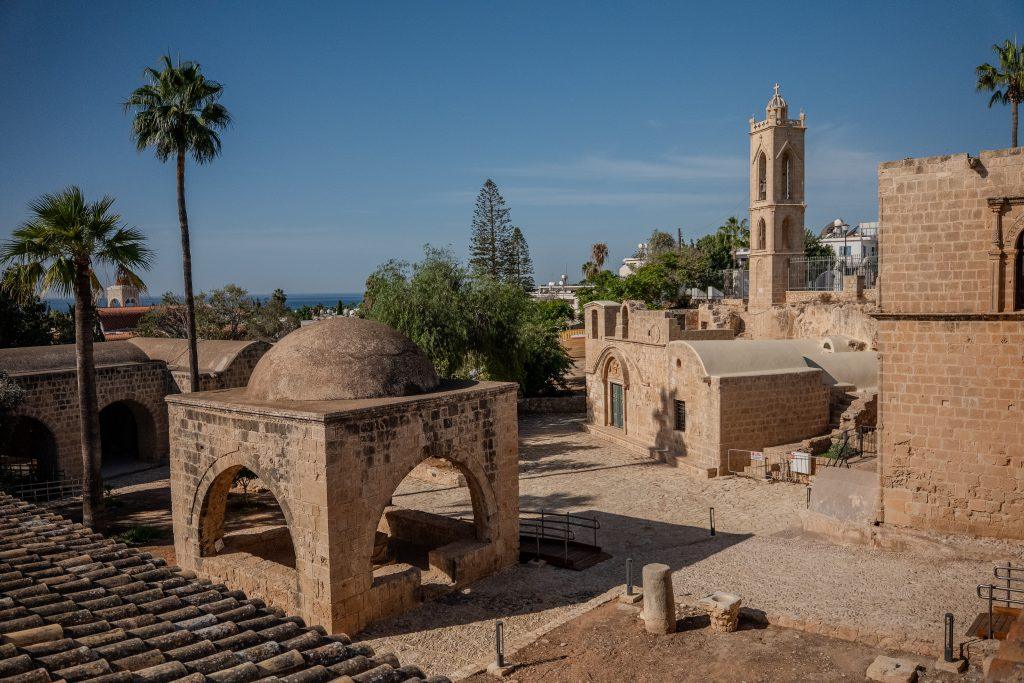
The monastery’s architecture reflects a fascinating blend of Byzantine, Frankish, Venetian, and Ottoman influences, visible in its church, stone arches, central fountain, and serene courtyard.
Just outside the monastery stands the famous ancient sycamore tree, a natural landmark that has shaded the area for hundreds of years and remains a popular point of interest for visitors.
Each element tells a story of the many cultures and eras that have shaped Cyprus.
Today, the Ayia Napa Monastery is open to visitors from around the world, offering a calm and contemplative environment where faith, history, and art, come together.
Whether you are interested in religious heritage, architecture, history, or simply seeking a quiet moment amid your travels, the monastery stands as a timeless symbol of Cyprus’s enduring cultural identity.